
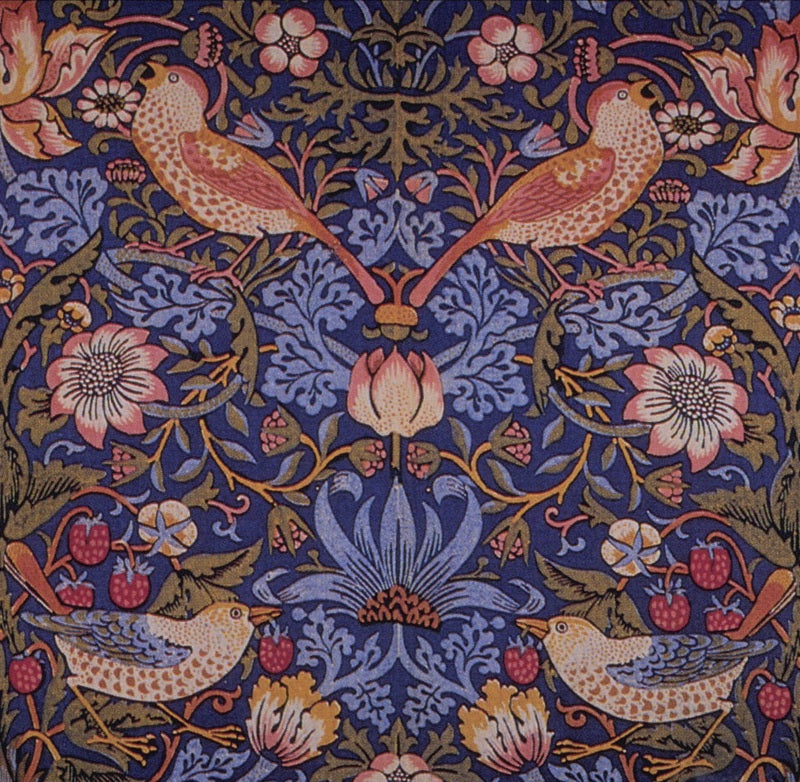
Ever wondered why there are so many little birds and flowers and twisting vines in the British design tradition? Here’s the answer – and why we still love them today…
Foliage curling into repeating patterns…. Blooms opening across a surface… Gorgeously-proportioned little birds perched among branches or weaving through vines. Once you start to notice it, you see the natural world everywhere in the archives of the great British design houses.
In our series exploring the rich tradition of British pattern design, we looked at the great British design houses, the history of pattern in the home, and why historic prints still work so well in modern interiors. Here, we turn to one of their most distinctive features: their enduring love of nature.
Nature as a starting point
For many designers, particularly those associated with the Arts & Crafts movement, nature was not just a source of inspiration – it was a guiding principle.
Designers such as William Morris believed that the natural world offered the most perfect forms and patterns. Rather than inventing decoration from scratch, they looked closely at plants, flowers and animals, studying how stems curve, how leaves overlap and how colours vary or repeat.
The aim was not to copy nature exactly, but to understand its logic. In an age of increasing industrialisation, this approach also carried an assertive philosophy. Nature represented order, beauty and authenticity – qualities that many felt were being lost in mass production.
Translating nature
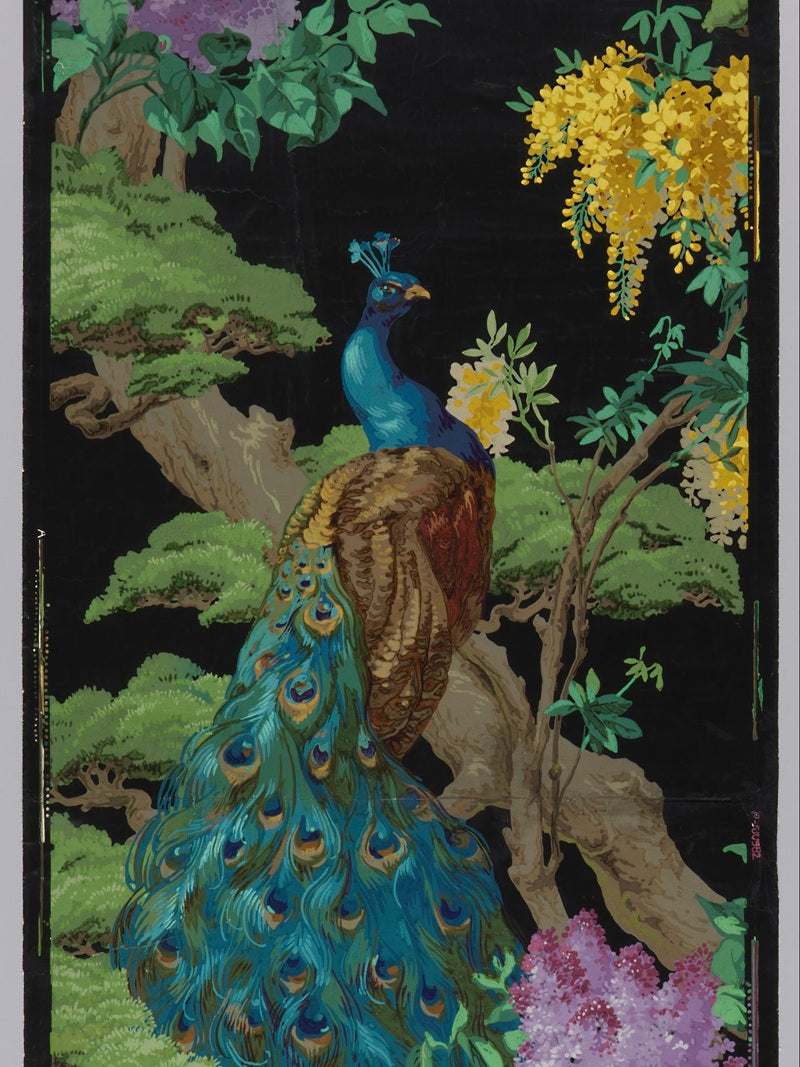
What makes these designs so distinctive is that they are not literal representations of nature. A Morris leaf is not quite a real leaf, and a Voysey bird is not quite a real bird.
Designers simplified and stylised what they saw: exaggerating curves and adjusting proportions, and organising elements into repeating structures that would work across a surface. This process of translation is what turns pictorial representations of nature into patterns.
It also explains why these designs feel both familiar and slightly idealised. They are recognisable enough to be comforting, yet sufficiently well-ordered that they feel visually satisfying.
The recurring motifs
Over time, certain motifs appear again and again in British textile design.
Leaves and vines
Leaves and trailing stems are perhaps the most fundamental building blocks of pattern. They provide structure and movement, guiding the eye across a surface and linking different elements together.
Flowers
Flowers tend to act as focal points. They introduce colour and variation, thus giving a pattern energy and rhythm.
Birds and animals
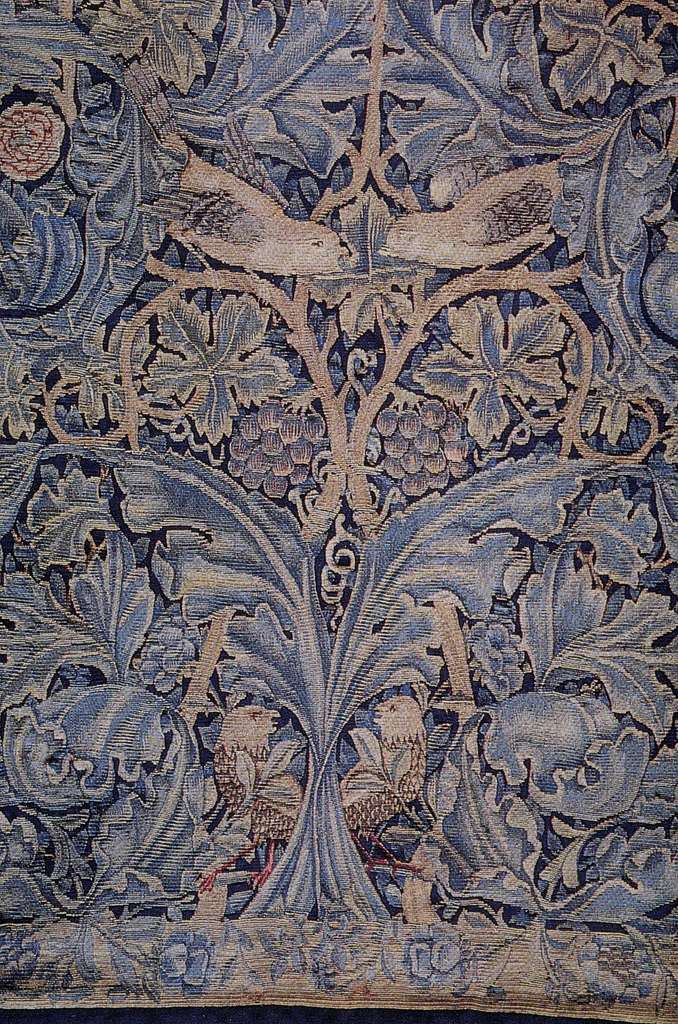
Birds, in particular, appear frequently – perched, in flight, or tucked among branches. They add a sense of life and narrative, bringing personality charm to what might otherwise be purely decorative.
Together, these elements create patterns that feel richly layered, and also dynamic and alive.
Why nature never dates
One of the reasons these motifs endure is their universality. Styles change and colours come in and out of fashion, but the natural world remains a constant reference point. We instinctively recognise these forms, and we tend to respond positively to them at a deep level.
Even in modern, urban homes, there is something appealing about the presence of leaves, flowers and birds. They soften hard edges, and bring a sense of life and movement into a space.
Long before anyone coined the term “biophilic design”, pattern-makers understood this instinct. Bringing nature indoors simply makes rooms feel better.
Nature, then and now
What’s interesting is how easily these nature-based patterns adapt to different settings.
In a traditional interior, they feel entirely at home – part of a long decorative lineage. In a more contemporary space, they can feel fresh and slightly unexpected, adding warmth and character without disrupting the overall simplicity.
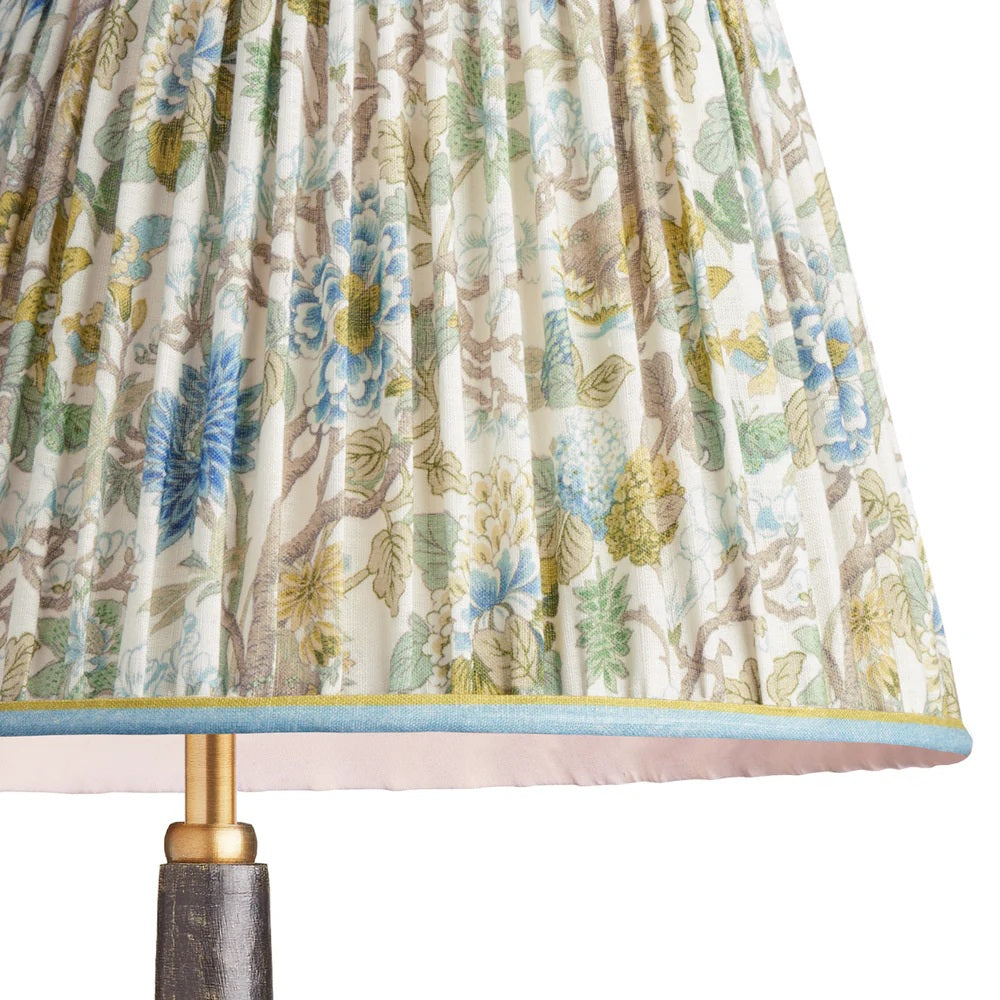
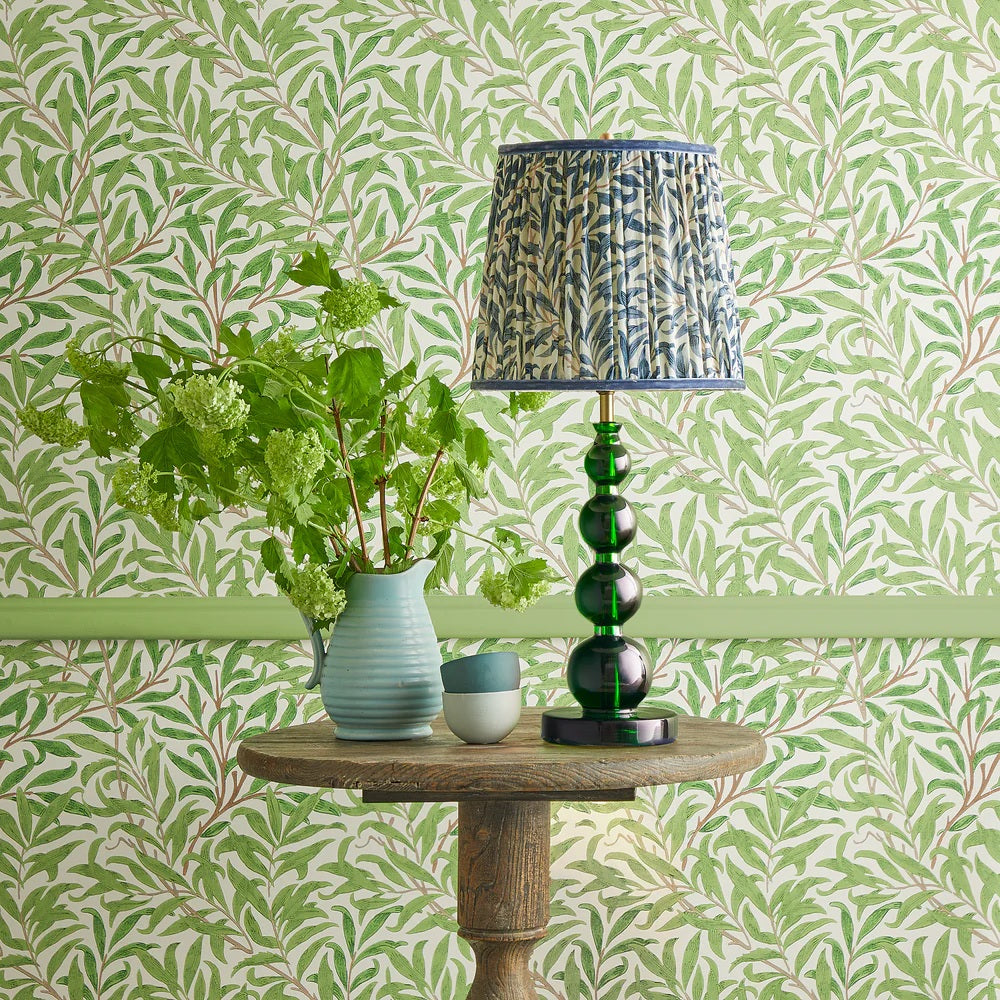
As with all pattern, it’s often a question of scale. A single element – a cushion, a chair, or a lampshade – can introduce just enough nature to lift a room.
A patterned lampshade, in particular, allows these designs to come alive. The light catches the colour, and the pattern ripples subtly as you move around it. Something that might once have been part of a grand interior becomes part of making everyday life better.

A tradition that continues
The enduring presence of nature in British textile design is a reminder of a way of thinking about decoration. Rather than chasing novelty, many of the great designers looked to something constant – they studied it carefully, and translated it into forms that could be lived with in the home.
That approach still resonates today. Whether in a historic archive print or a contemporary interpretation, the appeal of leaves, flowers and birds remains remarkably strong.
It seems we haven’t moved on from nature in design and, with any luck, we never will.
At Pooky, we’ve been fortunate to work with some of the great British design houses to create lampshades based on their extraordinary pattern archives, including Liberty and Sanderson.
You can see our current collaborations with Morris & Co. and with GP & J Baker – and browse our full glorious range of lampshades here.
See also:
A Beginner’s Guide to the Great British Design Houses (and why they still matter)
The British Pattern Makers: How we learned to love decoration again
The Secret of Historic Prints: Why they still work today
Image top: William Morris’ famous Strawberry Thief design (1883) (Public domain)